Use cases
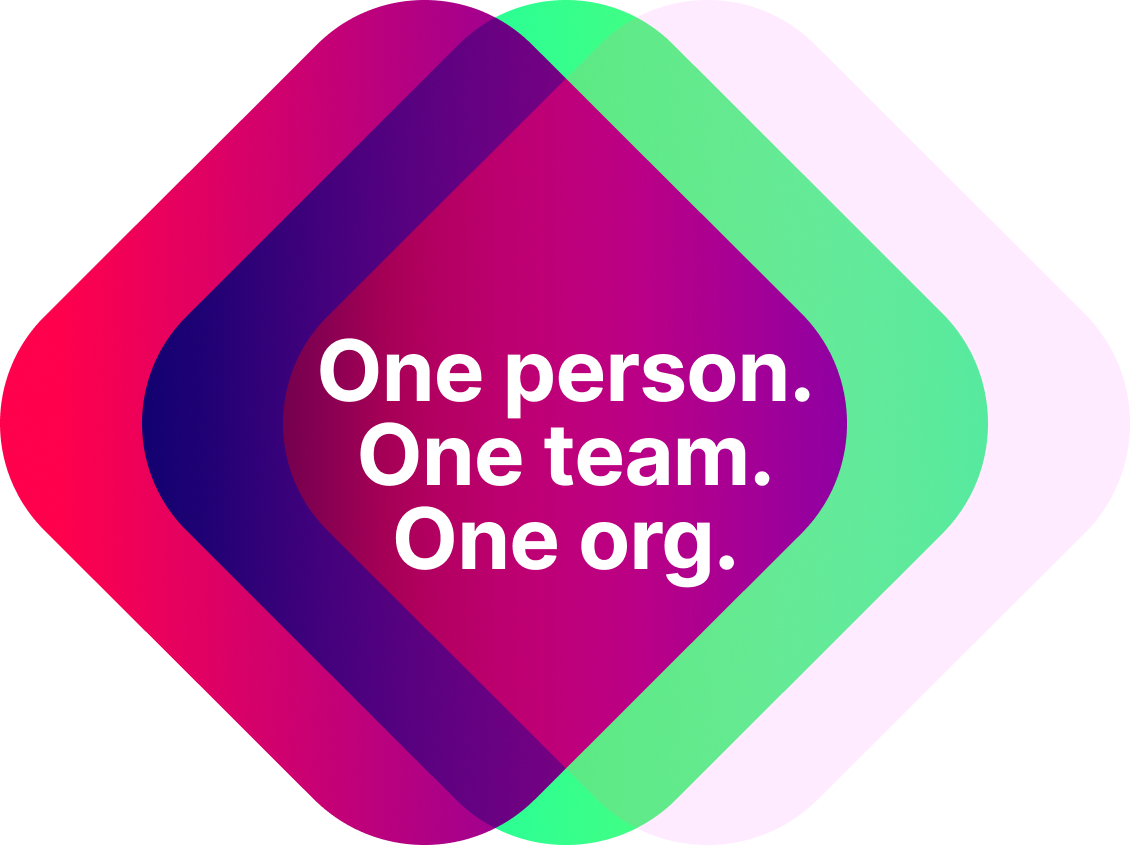
A Decision Record is useful from the day it's written, but it keeps paying off long after that, in moments nobody plans for, whether you're working alone, on a team, or across a whole organization.
Solo
You forget why you made a choice you were sure you'd remember. Context that's obvious today is gone in six months, and a single person working alone is three people who can't talk to each other: past-you, present-you, and future-you.
A decision ledger closes that gap for one person the same way it does for a team. Write the reasoning down once, at the moment you decide, and future-you can ask past-you what happened and why, instead of reconstructing it from whatever's left behind.
If you're a founder, the stakes are sharper. A lot of what your organization decides day to day is how you think, absorbed by the people around you and never written down anywhere else. That works until you step back or the company outgrows the room you're in, and then it becomes the bottleneck: people either freeze or decide in a way that contradicts you. Record it now, while it's still your own reasoning, and the organization can keep deciding the way you would even when you're not the one deciding.
If you're already keeping a markdown notes file for choices like this, a decisions.md, a project journal, keep writing it. A plain file can't tell you later whether the choice still stands: see how a ledger compares to notes on the what you use today page.
Team
An engineer who has spent years inside a codebase is carrying years of decisions nobody else fully understands, and when they leave, that reasoning leaves with them. The code survives, the ticket, the architecture, the policy, all still there. What's gone is why any of it looks the way it does, and the next person to touch it has to reconstruct it from scratch.
On a shared ledger, the reasoning doesn't belong to whoever wrote it down. It belongs to the team, so when someone moves to a different project, team, or company, what was decided and why stays exactly where it was.
The same gap shows up anywhere institutional knowledge lives in one head: a sales team that can't reconstruct why a pricing exception was granted, a campaign's logic evaporating between cycles because nobody who ran it is still around to explain it.
Organization
At the level of a whole company, the same ledger does three more things. Working alone, one person feels the problem, sharpens it into something specific, writes it up, and commits to it, all in one head. The moment a second person is involved, those roles split: someone proposes, someone else decides. That split is exactly why sharing and approval become organizational concerns, not just a bigger version of what a team already does.
Take something concrete. The Executive Committee adopts a remote-work policy: that's one decision, sealed in their own ledger. Legal doesn't inherit it as an order, they admit it as a fact and open their own thread on payroll nexus. IT inherits it as a constraint on a VPN decision. HR sets performance norms under it. Four parts of the same company living through the same decision differently, each keeping their own reasoning, none of it flattened into one company-wide log.
Onboarding: new hires and new agents ramp up fast
A new hire's first weeks are mostly spent reconstructing context that already exists somewhere: in someone's head, in an old thread, in a decision nobody wrote down. They read the code and the docs, and still ask "why is it like this?" in their first stand-up.
With a decision ledger, that question has an answer. A new person, or a new AI agent added to the team, can query the ledger directly: what was decided, what was considered and ruled out, and what was believed true at the time. The reasoning doesn't live in one person's memory anymore, it lives somewhere anyone, or anything, can ask.
This isn't only a developer problem. Anyone joining a team, a project, or an organization runs into it, and the fix is the same.
Working with partner companies: one record, not two stories
Companies working together (a vendor and a client, two teams on a joint project) tend to end up with two separate accounts of the same decision: an email thread on one side, a slide deck on the other, each drifting a little further from what was agreed.
A shared decision ledger closes that gap. One side proposes a decision with its reasoning attached, the other reviews it against the same record, and once it's settled both companies are looking at the same account of what was agreed and why, not two summaries quietly diverging over the following months.
Part of your decision intelligence stack
Memolok is the third pillar of Decision Intelligence, alongside Decision Automation (rules engines, ML decisioning) and Decision Support (analytics, dashboards). Those tools are good at informing a decision. Neither one is built to preserve the decision itself once it's made.
Memolok sits downstream of them. A recommendation from a decisioning system, a chart from a dashboard, an option an AI agent surfaced, any of that can feed the choice, and the choice, the reasoning, and what was expected to follow get captured on the ledger regardless of where the input came from. The organization ends up with one queryable record of what was decided, even when the process that led there ran across several different tools.
For a PMO, this is where zombie and phantom decisions stop: a steering-committee call that's sealed with a clear verdict doesn't come back for re-debate next quarter because nobody remembers whether it was ever settled. For finance, the same immutability reads as an audit trail: what was known at the time a budget was committed, preserved exactly as it was, queryable by an auditor on demand instead of reconstructed from someone's calendar.
Read more
- Decision Intelligence: the three-pillar category the Decision Record sits inside.
- Decision debt: what it costs when moments like these go unrecorded.
- Product: what a Memolok Decision Record contains.
- Glossary: plain definitions for MDL, MDR, and the rest of the vocabulary used on this page.
Try Memolok today
Memolok is in early testing, and we're inviting people to try it now. Sign up today and start recording your decisions. A person reads that list, so nothing lands in your inbox automatically.